

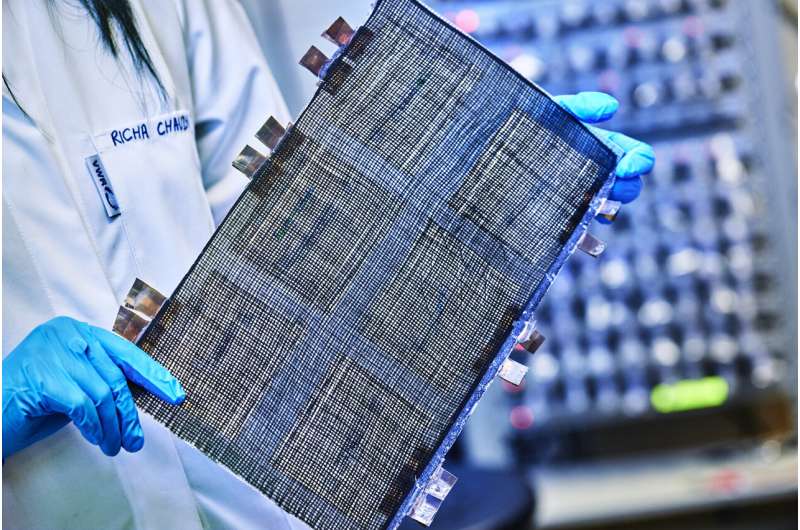
Using carbon fiber as a material for both batteries and structural components to manufacture vehicles or electronic products can significantly reduce weight and energy consumption. A research team from Chalmers University of Technology in Sweden has made significant progress in the field of low-quality energy storage. Their newly developed structured battery has the potential to halve the weight of devices such as laptops, make mobile phones as thin as credit cards, and extend the range of electric vehicles by 70% after a single charge.
Since 2018, the research team has made significant progress in improving stiffness and energy density. In 2021, they reached a critical milestone as the carbon fiber new battery was able to provide an energy density of 24Wh/kg, equivalent to about 20% of the capacity of a typical lithium-ion battery. Now, they have raised this number to 30Wh/kg. Although still lower than current commercial batteries, the benefits of reducing weight have created a new type of power. As batteries are a part of the vehicle structure, they require less energy overall.